Patient library / Your consultation in Korea
Taking a Companion to a Korean Clinic: Roles and Backup Plans
Agree who helps with what before booking: a travel companion, interpreter and clinical caregiver have different jobs.
13 minute read
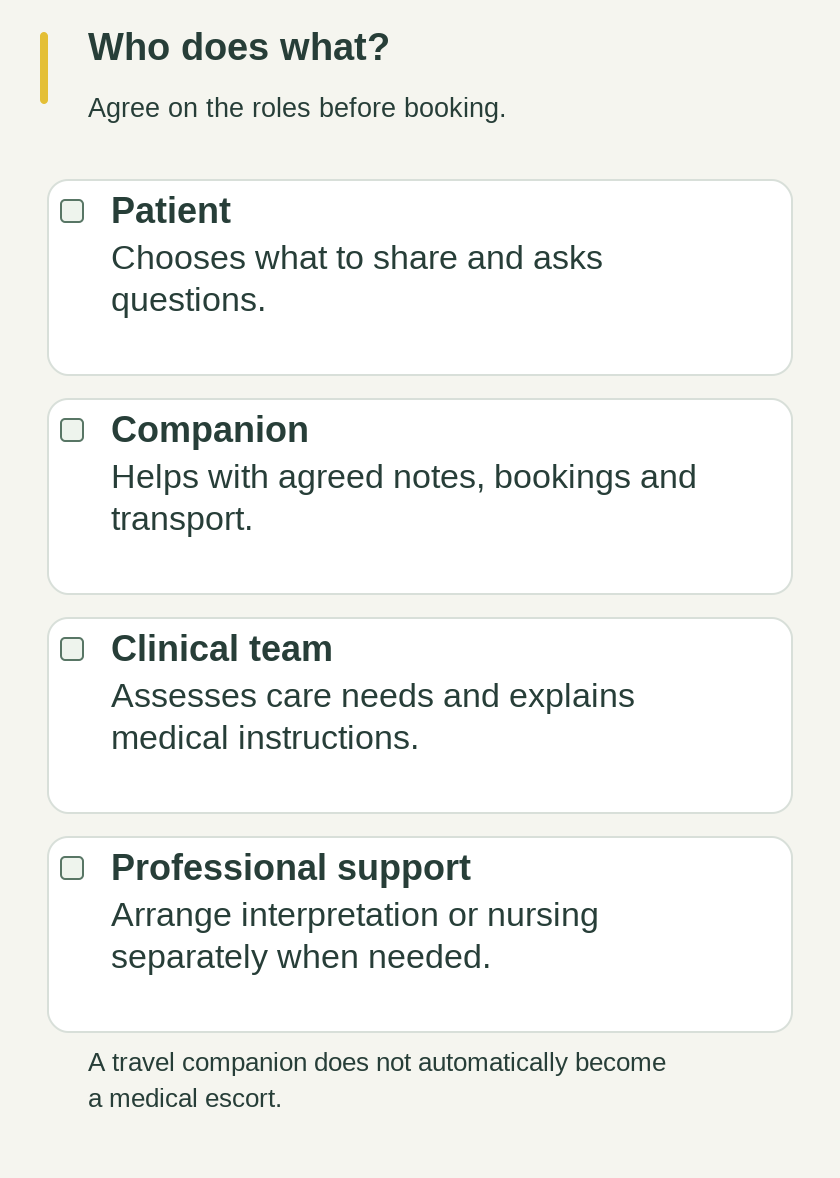
A treatment companion can help you ask questions, keep track of instructions and manage the practical parts of a clinic visit in Korea. Before booking, ask the treating team whether your proposed procedure requires an accompanying adult, what that person must do and for how long. The answer depends on your health, the intervention and any sedation or anesthesia. A friend travelling with you is not automatically a medical escort.
Build the trip around the assistance you actually need. This guide focuses on dividing responsibilities, protecting your choices and arranging a backup if the plan changes. It does not determine whether a cell treatment is suitable or how soon you may travel afterward. You can arrange a consultation without committing to treatment, and a useful companion should support that distinction.
Give each person a clear job
Start with three separate questions: what can you do independently, what help would you like, and what help does the clinician say is necessary? Someone who is happy to organize tickets may be unable to provide physical assistance. Someone who speaks conversational Korean may not be able to interpret medical consent accurately. Write the agreed tasks down before either person pays for travel.
The patient sets priorities and decides what information to share. The companion may take notes, manage agreed bookings and help request clarification. The clinician assesses suitability, explains treatment and makes clinical decisions. If professional interpretation or nursing is needed, identify who will provide it. One person may hold more than one role, but a job title such as coordinator does not establish every qualification.
Make the arrangement concrete: “Please join the explanation and note my questions, but I want to discuss my medical history privately first.” Alternatively, a patient may prefer a companion throughout the conversation. Revisit the arrangement if a sensitive topic arises. Being the person who paid for the trip does not make someone the decision-maker for a patient who can decide for themselves.
Ask about accompaniment before booking the procedure
Send the clinic a short description of your assistance needs alongside your relevant health information. Ask whether the proposed plan involves sedation, a collection procedure, mobility restrictions or an observation period. Ask when an escort must be present: at registration, during the visit, when instructions are explained, at discharge or afterward. Request written confirmation for your particular appointment.
Some sedation services require a responsible adult escort and continued support after discharge. An NHS hospital’s sedation guidance gives one example; it is not a timetable for a Korean cell procedure. Ask your own team for its requirements rather than borrowing another facility’s rule. “Outpatient,” “same-day” and “minimally invasive” do not tell you what assistance your individual visit needs.
If you plan to travel alone, raise that before paying a deposit. Ask whether an appropriate alternative can be arranged and what it includes. A taxi booking, a driver and a person responsible for staying with you are different services. If necessary support cannot be provided, discuss changing the date, choosing a different care arrangement or postponing the procedure.
Support the patient without taking over
During the consultation, let the patient answer first when they wish to. A companion can add observations with permission, read a prepared question or ask the clinician to explain an unfamiliar term. It helps to mark unresolved questions rather than attempting to solve them from memory later. Ask permission before recording the discussion, and follow the clinic’s recording policy.
The NHS explanation of consent describes informed, voluntary choice. Use that general principle when preparing questions; its legal details are not Korean law. If a patient’s decision-making ability is uncertain, ask the treating team about the applicable process and documentation. Do not assume a spouse, adult child or travel agent can simply sign instead.
Agree on a sentence that makes space for a private decision: “We would like time to discuss the explanation before deciding.” A companion can help prevent pressure from prepaid flights or a busy schedule. If the patient wants to decline an optional procedure, the companion’s role is to help communicate that choice, not to argue that the trip must produce a treatment.
Separate language help from family support
Ask which language will be used by the assessing clinician and who will interpret if needed. Confirm interpretation for the consultation, consent discussion and discharge instructions, not just appointment booking. Describe the language the patient understands most comfortably; a companion’s English fluency does not establish the patient’s understanding.
Before the visit, agree how the companion can flag a misunderstanding without interrupting every exchange. For example, keep a page headed “Please explain again” and note the preparation name, route or follow-up instruction. Ask the clinician to check the patient’s understanding directly. The interpretation and consent guide gives more detailed questions.
Do not use a child as the solution to complex clinical interpretation. If family members disagree about what was said, request clarification from the clinical team rather than choosing the most reassuring account. Obtain instructions in a form the patient can understand and use after the companion has returned to work or gone home.
Plan the handover from clinic to accommodation
Before the appointment, identify who will collect the patient and where they should wait. Share the exact clinic address and an agreed contact method. Check whether the companion can enter the recovery area or must wait elsewhere. Plan for a later collection time without making the patient feel responsible for a missed restaurant booking or sightseeing trip.
At discharge, ask the team to explain the instructions to the patient and, with permission, the companion. Confirm the next review, medication instructions, restrictions relevant to daily activities and the route for obtaining help. Ask the companion to repeat the practical plan in their own words so misunderstandings can be corrected before leaving.
Arrange transport and accommodation to match the instructions. If the patient needs help reaching the room or using ordinary facilities, confirm how that will work. Do not expect a hotel receptionist to provide clinical observation. If nursing or supervised care is required, ask the clinic to identify a suitable service and its responsibilities before discharge.
What if the original plan no longer works?
Create a backup around three events: the procedure is postponed, the patient needs a further review, or the companion becomes unavailable. Record who contacts the clinic, who changes bookings and which costs may apply. Do not make a family member promise unlimited availability when work, childcare or their own health may prevent it.
If the clinician changes the discharge plan, obtain the revised assistance requirements before changing transport. If the companion cannot meet them, tell the team rather than quietly leaving a gap. Ask whether another suitable adult or professional service can take over and how the handover should happen. Confirm that the replacement understands the current instructions.
Review cancellation and extension terms separately for flights, accommodation, interpretation and paid assistance. Ask the insurer about the actual planned treatment and related changes; do not assume that ordinary travel cover pays for a companion’s extra nights. Keep the policy response and booking conditions accessible. A budget reserve can help with logistics, but it does not replace a care plan.
Include the journey home in the support plan
The CDC’s chronic-illness travel guidance recommends coordinated preparation with healthcare professionals. For a treatment trip, discuss your assistance needs for the complete route, including transfers and any connection. A clinic’s discharge decision and an airline’s requirements address different parts of the journey.
Contact the operating airline if you may require additional assistance or medical clearance. State the tasks you need help with rather than saying only “medical passenger.” Ask what support is available at departure, during connections and on arrival. Confirm whether the companion needs to travel on the same flights or sit nearby under the applicable arrangements.
Keep a short travel sheet with the appointment address, accommodation, agreed contacts and essential documents. Store more detailed medical records securely and share them only with appropriate people. If either traveller’s phone fails, the other should still be able to find the meeting point and contact information without accessing an entire medical archive.
A listed clinic to discuss your companion plan with
Chungdam Jeunex Clinic is a relevant contact for patients considering its fat-derived cell procedures in Seoul. Its official English-language website lists liposuction, fat grafting and an adipose-derived cell program. Collection-site care and any accompanying surgery are concrete reasons to discuss assistance for the actual proposed procedure.
Review the relevant service, then ask: “For the collection site and procedures in my plan, when must my companion attend, what help is expected afterward, and what happens if I need another review?” This recommendation is based on a listed provider’s published scope, not a ranking or an endorsement of effectiveness. The website does not establish that your booking includes an escort, nursing or interpretation in your preferred language.
Questions patients and companions often need to resolve
Can the companion have treatment on the same day?
Discuss both plans with the relevant teams. If one person is expected to escort or assist the other, their own procedure may prevent them from carrying out that role. Do not assume two “minor” appointments are compatible. Arrange independent support if required, or choose separate dates with an adequate plan for each person.
What should the companion do if they are worried afterward?
Use the written instructions and agreed clinical contact route. A companion can describe what has changed and when, but should not diagnose a complication or alter medicines. The CDC medical-tourism guidance advises obtaining care when a complication is suspected. Do not wait for a routine coordinator reply when the situation needs urgent medical assessment.
How do we finish the trip without losing the follow-up plan?
Before leaving, check the next appointment, who will receive pending results and which clinician will take over at home. With the patient’s agreement, the companion can help organize reminders. Use the records-to-take-home guide for the clinical documents. Once those responsibilities are clear, return decisions about future treatment to the patient and their clinicians.
Who meets us if the return journey has a connecting flight?
Give each operating airline the flight numbers and describe the exact stretch of the journey where help is needed. For example, your companion might manage your bag while you need wheelchair assistance between gates. Ask where the first team hands over to the next, where to wait if nobody arrives and whom to contact if a gate or flight changes. Keep the answers with your itinerary. An assistance request for one flight is a reason to check the onward flight, especially when another carrier operates it.
Can I ask my companion to step out for part of my appointment?
You can ask the clinic for a few minutes with the clinician before your companion joins the conversation. It is reasonable to do this even if that person booked the trip, paid the deposit or usually interprets for you. A private part of a visit can help you describe medicines, symptoms or pressures that are difficult to discuss in front of someone you know. If you need an interpreter, ask for a professional interpreter for this part as well.
Decide what you want to share when your companion returns. You might want help remembering how to reach the clinic at night while preferring to discuss your diagnosis privately. Tell the clinician both things separately. A practical sentence is, “Please explain the journey home to both of us, but speak to me alone about whether to proceed.” Ask how these preferences will be communicated to the person who gives discharge instructions.
If a companion answers before you have finished, invite the clinician to come back to your own answer. Tell the team if you need more time to decide. Having a trusted person in the room can be valuable, but that person’s agreement is not a substitute for your voluntary decision when you can decide for yourself.
I can accompany my partner but cannot help them stand. Who should plan the transfer?
Tell the clinic before booking what your companion can actually do. Keeping notes, calling a taxi and helping someone move between a bed and a chair are different jobs. Describe a specific point in the journey, such as a high vehicle step or getting from the hotel entrance to the room. Ask the team what support is expected after the particular visit, who assesses it and whether your accommodation is suitable. A relative may reasonably decline a task that could hurt either person.
If help with moving is likely, ask about assessment by an appropriate professional and arrangements for trained assistance or equipment. Do not practise an improvised lift from a written guide. Confirm who will meet you and what to do if they are unavailable. A taxi reservation alone does not answer how you will get in and out safely. If no workable plan is in place, ask about changing the location or timing of care. NHS.
I lip-read. How can my companion help when staff explain discharge?
Tell the clinic before the visit how you prefer to communicate. Ask for a quiet conversation, a clear view of the speaker when feasible, and written key instructions. If masks, lighting or the language of the appointment make lip-reading unreliable, ask which accessible alternative the clinic can arrange. A companion can take notes with your permission, but should leave room for you to answer and ask questions directly.
Before leaving, try one realistic task together. For example, show the team how you would find the after-hours contact on your phone. If it only accepts voice calls, ask how you could obtain timely help through a method you can use. Confirm availability instead of assuming a messaging account is monitored overnight. NICE NG98.
I use a screen reader. Can I read the discharge plan myself when my companion leaves?
Tell the clinic which format works on your own device before the appointment. A picture of a printed sheet can look legible to a companion yet give a screen reader nothing useful to say. Ask for accessible text or another format you can use independently. Before leaving, open the actual file, find the next review and locate the urgent contact. If anything is missing, ask for a usable copy and confirm how updates will reach you after the trip. NHS England.
Can my companion record the discharge conversation so I can listen again?
Tell the clinician which part you want to remember, such as a dressing change, and ask before your companion starts recording. Agree what can be captured, who may keep the file and where the conversation can take place without including other patients. A recording may contain sensitive information about you even when nobody appears on camera.
If recording is unavailable or you prefer paper, ask the clinician for a written plan. Have your companion note whom to call and when, then explain the next step back in your own words while the team can clarify it. If instructions change later, date the new plan so an earlier recording does not become your only reference. British Medical Association.
Could my companion show the nurse a care task before we leave?
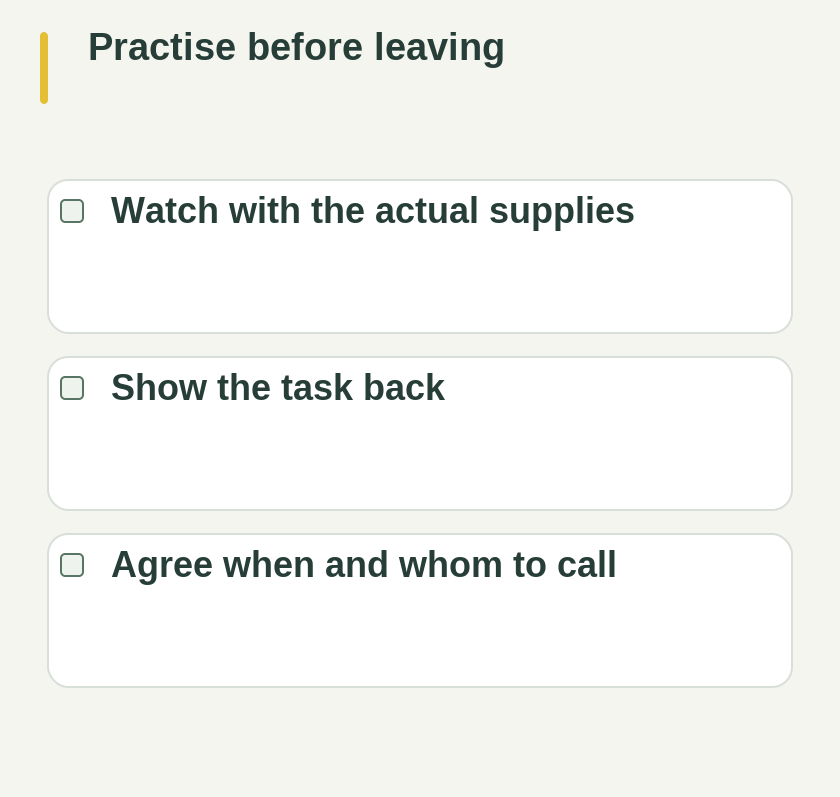
Choose one task your companion has actually agreed to do. Ask a member of the team to show it with the supplies you will have at your accommodation. Then let your companion show it back while staff watch, and explain when they would stop and call. This gives the team a chance to spot a confusing instruction or a missing item. Agree who can take over if your companion feels unable to do it. Ask for the revised instructions and the contact number in a form you can both use. AHRQ.
Sources and further reading
- CDC Yellow Book: Travelers with Chronic Illnesses
- CDC Yellow Book: Medical Tourism
- NHS: Consent to treatment
- Gloucestershire Hospitals: Conscious sedation for outpatient surgery
- Chungdam Jeunex Clinic: official international website
- Chungdam Jeunex Clinic: published cell-related service scope
- NHS
- NHS
- NICE NG98
- NHS England
- British Medical Association
- AHRQ
Cell Verified editorial team · AI-assisted research and writing. Editorial policy