Patient library / Your consultation in Korea
Bringing Prescription Medicines to Korea: A Patient Checklist
Check the medicine, the border rules and the procedure plan separately before you travel.
13 minute read
Before travelling to Korea with prescription medicines, identify every active ingredient and check the entry requirements for that product. If a medicine contains a substance controlled in Korea, obtain the relevant MFDS permission before arrival. Separately, ask the clinician planning your procedure how your medicines should be managed. A prescription, an import permit and permission to proceed with treatment answer three different questions.
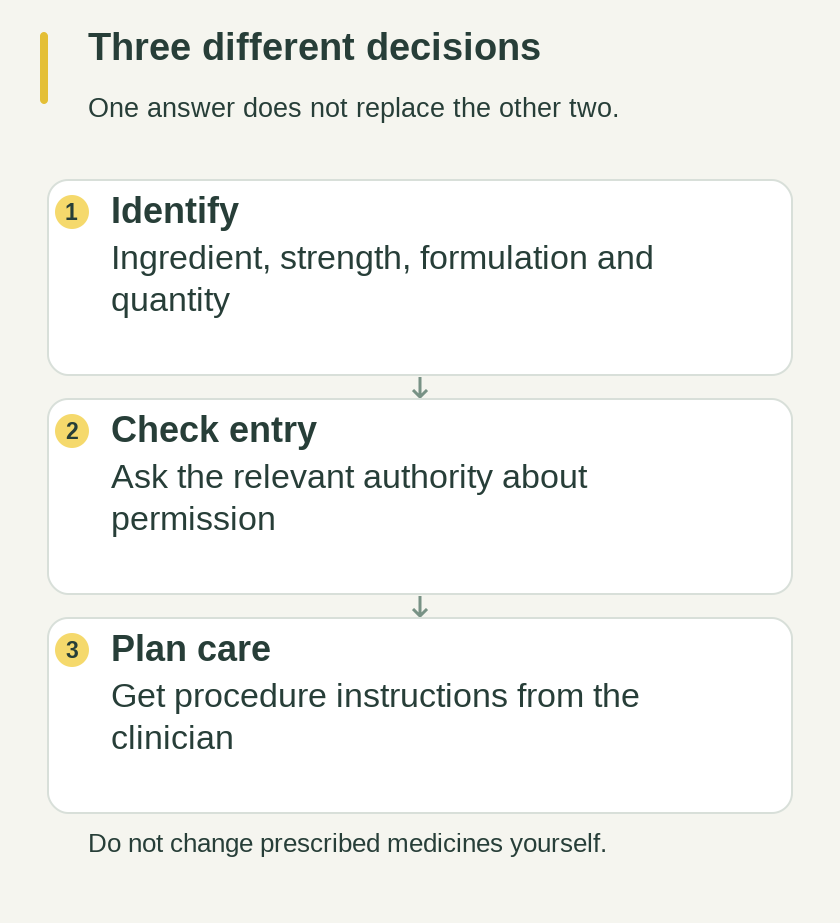
This guide helps you organize that conversation without changing treatment yourself. It applies whether your visit is for an assessment, an injection, an infusion or a procedure involving tissue collection. Start with your usual prescriber or pharmacist while the itinerary can still change, rather than trying to solve an unclear medicine rule at the airport.
Three checks before booking a procedure
First, establish what you actually take. The ingredient name, formulation and strength matter more than the name printed most prominently on the box. Second, ask the relevant authority what you may carry across each border. Third, give the receiving clinician the complete list so they can decide what it means for the planned care. Keep the replies together, but do not treat a reply about one question as an answer to the others.
For example, a clinic coordinator may confirm an appointment while the doctor has not reviewed your medicines. An airline may accept a cooling bag without deciding whether the medicine can enter Korea. An authority may permit a product without assessing its compatibility with sedation. In your preparation notes, write who answered, which question they answered and what remains unresolved. This makes the next enquiry much more precise.
Build an ingredient list that another clinician can understand
Use one row for each product: active ingredient, brand, strength, dosage form, prescribed schedule, reason for use and intended travel quantity. Include medicines taken only when needed, injections, inhalers, eye drops, creams, non-prescription products and supplements. Do not omit a product because you do not regard it as a “real medicine.” Let the clinician decide what is relevant.
If a product combines ingredients, list the complete combination. If a label is unclear, bring the packaging to a pharmacist rather than guessing from a web image. Record whether the medicine is a tablet, liquid, patch or another formulation; the same ingredient name does not make different formulations interchangeable. Keep a photograph of the labelled packaging as a reference, while retaining the actual dispensing documents.
Make a separate allergy and reaction note. Describe what happened and which product was involved, if known. A note saying “allergic to painkillers” may leave an important uncertainty; your clinician can help clarify the record. Date the list and update it whenever the prescription changes. For the broader consultation packet, use our medical-records guide.
Check Korean permission using the ingredient, not the brand
Korea’s MFDS self-treatment permit service is the official route for medicines containing controlled narcotic or psychotropic substances. The requirement is not removed by a foreign prescription or nationality. Use the current instructions for your application and keep the issued decision with the corresponding medicine details. A submitted application is not the same thing as permission.
A Korea Customs and MFDS announcement dated 11 November 2026 describes a personal-carriage allowance effective 12 November for properly prescribed or purchased, regulator-authorized medicines: six bottles, or a three-month treatment quantity when exceeding six bottles. Do not read that general announcement as permission to bypass controlled-substance rules. Ask the authority how it applies to your exact product and packaging.
A useful enquiry identifies the ingredient, strength, dosage form, number of units, intended arrival and departure dates, and whether the medicine is prescribed to you. Ask which pathway applies and what documents must accompany it. Avoid sending a vague question such as “Can I bring my usual medication?” If the authority requests sensitive documents, use its designated submission channel rather than posting them in public travel forums.
Make a compact document packet
Prepare an index that connects each item in your bag to its supporting documents. Place the prescription or dispensing record beside any required medical letter and permit. Check that the patient name matches your travel documents, and that the medicine name and quantity agree across the records. If names use different scripts, ask the issuing clinician how to provide a clear English identification rather than editing a signed document yourself.
The packet should be easy to retrieve without opening your entire medical history in a public space. Keep a readable offline copy of essential records and a secure backup. A link that requires a mobile signal or an expired login may not help when you need it. If a family member helps organize the files, decide which information you want them to have and avoid unnecessary copies.
- Medicine list with a preparation date and prescriber contact.
- Prescription and supporting letter when required.
- Permission or official clarification for the exact product, when applicable.
- Travel dates and the amount you intend to carry.
- Separate written instructions from the treating clinician.
Keep financial receipts if needed to show lawful purchase, but do not confuse a receipt with a prescription. An appointment confirmation also cannot explain the contents of an unlabelled container. The aim is to make the product and its purpose understandable, not to assemble the largest possible folder.
Plan the journey, storage and supply
The CDC’s chronic-illness travel guidance recommends discussing medicine access and time-zone scheduling before travel and carrying medicines in hand luggage. Ask your pharmacist about the specific product’s storage requirements and the airline about any relevant equipment or liquid rules. Plan enough supply for the journey and a possible delay within the quantity you are legally permitted to carry.
Work through the whole route: the trip to the airport, time in transit, arrival transport and accommodation. If a product needs particular storage, confirm how each stage will meet it. Do not assume a hotel minibar is suitable simply because it feels cold. Ask what to do if the product experiences an unexpected temperature change; do not invent a rescue method or use a replacement without professional advice.
If your flight changes, review the quantity and documents again. A longer visit may affect both your supply and the permission issued for your itinerary. Discuss an acceptable contingency with the prescriber and relevant authority. Do not assume someone can send a replacement internationally or carry it on your behalf under the same rules that apply to your own accompanied medicine.
Get medicine instructions for the actual procedure
Send the receiving clinic your current list before the assessment, using its agreed secure channel. Explain the proposed procedure as you understand it and ask which clinician will review the medicines. If the plan includes more than one intervention, the instructions should account for the complete visit. “Stem cell package” does not tell a prescriber what collection, anesthesia or additional treatment is involved.
Do not stop, reduce, skip or substitute prescribed treatment because a generic travel checklist or promotional message says to do so. Ask the treating clinician to coordinate any proposed change with the prescriber responsible for the underlying condition. If two instructions conflict, point out the conflict explicitly and obtain a single clear plan before proceeding. This page cannot supply individualized dosing or fasting instructions.
A helpful written plan identifies the medicine, the instruction, the relevant date or procedure stage, who made the decision and whom to contact if circumstances change. Ask how you should handle a delayed appointment or a cancelled procedure. A plan created for one date may need clarification if treatment moves. Use our procedure-day planning guide to connect those questions to the visit schedule.
A listed clinic to discuss your proposed visit with
Cheongdam Cell Clinic is a relevant consultation option for readers already considering its advertised cell-related programs. Its official international website describes skin, hair and whole-body programs in Seoul. That service scope is the reason for including it here; this is not a recommendation that a cell procedure is suitable for you or that it can replace your regular medicines.
Before arranging travel, ask the clinic which medical professional will review your medication list, what exact intervention is being considered and whether your usual prescriber needs to contribute. Review the proposed service and request an assessment if it matches your question. The clinic can explain its clinical plan, but an appointment or coordinator’s message cannot substitute for a border authority’s permission. Confirm any interpretation you need directly.
Include the return journey in the plan
If a Korean clinician prescribes a new medicine, obtain its active ingredient, strength, instructions and supporting record before leaving. Check the rules of your home country and any transit destination for that product. A medicine dispensed lawfully in Korea is not automatically permitted elsewhere, and the documents prepared for your outward journey may not describe the new prescription.
Ask the clinician to distinguish newly added medicines from those already on your list. If a brand changes, have a pharmacist or prescriber clarify whether it represents the same ingredient and formulation; do not decide from similar packaging. Carry the updated list to your follow-up appointment at home. Our records-to-take-home guide explains how to link medicines to the actual treatment report.
Questions before departure
Does a short trip remove the permit requirement?
Do not assume that it does. Classification and the applicable rules matter, even if you intend to carry only a small amount. Ask about your particular product before departure. If you cannot establish that you may carry an essential medicine, discuss the travel plan with your prescriber rather than simply leaving the medicine behind.
Can I buy an equivalent medicine after I arrive?
Availability, prescribing requirements and formulation need to be checked. Ask a qualified clinician about a practical, lawful alternative before relying on one. A brand sold at home may not be available in Korea. Do not let a travel booking commit you to an unplanned change in treatment.
What if something changes after I receive permission?
Compare the new itinerary or prescription with the details in the decision. Ask the issuing authority whether an update is needed, and tell the treating clinic about any medicine change. Keep the earlier and updated records clearly labelled so that neither a clinician nor an official has to guess which version applies.
My medicines went missing in transit. What information should I take to a local clinician?
Keep a separate copy of the dispensing label or prescription where you can reach it without the missing bag. Tell a local clinician or pharmacist which ingredient, strength and formulation you take, when you last took it and when the next dose is due. If that dose is approaching, seek advice promptly while someone else follows up with the airline. A photograph can help identify a product, but a clinician must decide how to handle an interruption. Do not borrow a companion’s medicine or improvise a catch-up dose.
The cold pack has frozen. How do I check whether my medicine is still usable?
A refrigerator in a hotel room can freeze items touching its back wall. A gel pack taken from a freezer can also freeze a pen placed directly against it. Insulin is an example where freezing matters. A cold-feeling bag is not evidence that a product stayed within its labelled storage range. Other medicines have different instructions, and the same medicine may have different instructions before and after it is opened.
Before departure, photograph the storage instructions and record the date you opened the container. Ask the dispensing pharmacist how to pack this specific product, what to do if you suspect freezing, and whom to call outside opening hours. If an incident happens, record when you last knew the storage conditions, what touched the container, and how long the exposure may have lasted. Say when a time or temperature is only an estimate.
If insulin may have frozen, get prompt advice from a pharmacist or diabetes clinician about replacement and the next scheduled dose. Looking at the liquid cannot confirm it is safe. Do not change the dose or delay seeking help while waiting for a reply from a travel coordinator. Share the written advice with the clinician managing your diabetes.
My phone changes time zones automatically. Which clock should I use for my prescription?
Bring your itinerary to the pharmacist who knows your prescription, including stopovers, overnight flights and the return journey. A phone may switch to Seoul time before you have worked out how much time has passed since a dose. A familiar reminder going off does not establish when the next dose is due. Ask for a written plan for each time-sensitive medicine that identifies the time zone as well as the date. Different medicines may need different advice.
Take a photo of the plan before departure. If a flight is delayed, record when you actually took the last dose and in which time zone. Give the pharmacist or prescribing clinician both that information and the revised itinerary. Ask whom to contact when their usual office is closed. Do not double a dose, omit one or move an injection because of a clock change without medicine-specific advice. Tokyo Metropolitan Institute of Public Health.
My prescription is in a missing bag. What should I tell a clinician in Korea?
If your next dose is approaching, contact a licensed local clinician or pharmacist promptly, especially if interrupting the medicine could be dangerous. The airline can trace a bag but cannot decide when you may safely wait. Bring a photo of the dispensing label or a prescription copy, your prescriber’s contact details and the time of your last dose. Say whether any supply is actually with you. A brand name or a picture of a loose tablet may be insufficient to identify the preparation.
Ask the clinician to confirm the ingredient, strength and release form and to discuss a safe plan for the interruption. A prescription from home may help identify the medicine without being valid for dispensing abroad. Avoid borrowing another person’s supply or guessing a replacement dose. Contact your insurer about a local consultation separately from the clinical question. CDC.
Does my preoperative medicine list include herbal tea or a supplement powder?
Show your prescriber and the Korean clinical team the actual product, including nonprescription blends. Tell them whether you drink an occasional cup as food or regularly take a concentrated extract. A brand name alone can hide several ingredients. Photograph the ingredient list and record the amount you actually take, how often and when you last used it. Some supplements can interact with medicines or affect surgery. Ask the team to review your specific plan and put any changes in writing before travel. NCCIH.
My medicine label says “take with food.” What if the clinic asks me to fast?
Take a photo of the label and send it through the clinic’s agreed channel before the appointment. Give the exact product and strength, the usual time and the reason you take it. Ask the preoperative team to reconcile the prescription with its fasting instructions and involve your prescriber or pharmacist if needed.
Ask for a written answer for this particular dose and a number to call if the procedure time changes. If you have already eaten, taken the medicine or missed it, tell the team what happened and when. Avoid improvising a snack, skipping a dose or doubling the next dose on the basis of a general fasting leaflet. Manchester University NHS Foundation Trust.
I wear a medicine patch. What should the MRI team know before my scan?
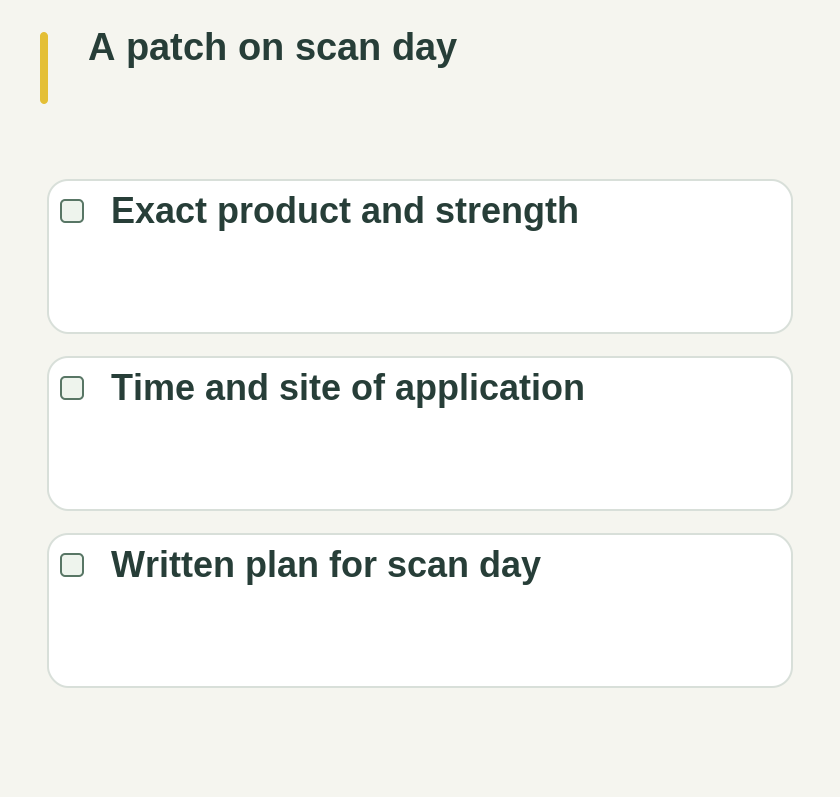
Show the radiology team the patch box or a clear photograph of its label when the scan is arranged. Some drug-delivery patches contain metal that can heat during an MRI. The backing may look ordinary. Give the team the product name, strength, where you wear it and when you applied it. Ask them to check the exact product with your prescriber or pharmacist and explain what to do before and after the scan. Removing or replacing a patch can change the dose you receive. Wait for instructions for your particular patch, even if you used a different brand at home. UCSF Radiology.
Sources and further reading
- MFDS — Permit to Bring In Narcotics for Self-treatment
- Korea Customs / MFDS — personal medicines announcement, 11 November 2026
- CDC Yellow Book — Travelers with Chronic Illnesses
- Cheongdam Cell Clinic — official international website
- CDC
- Tokyo Metropolitan Institute of Public Health
- CDC
- NCCIH
- Manchester University NHS Foundation Trust
- UCSF Radiology
Cell Verified editorial team · AI-assisted research and writing. Editorial policy