Patient library / Skin, hair & restoration
Nanofat vs Microfat vs SVF in Korea: Which Questions Matter?
Separate fat-grafting terminology from the result you want, then compare the preparation, evidence and complete surgical plan.
9 minute read
Microfat, nanofat and stromal vascular fraction, or SVF, are not three strengths of the same injection. They describe different fat-derived preparations, and their intended roles can differ. Before choosing a facial procedure in Korea, establish whether you want volume correction, a skin-quality change, or both. Then ask the surgeon to identify the material, processing and evidence for each part of the plan.

This distinction matters when a quotation uses the broad phrase “stem cell facial rejuvenation.” A useful consultation should turn that phrase into a specific procedure you can understand. It should also explain what conventional fat grafting or other options might achieve without the proposed extra processing. A more elaborate name is not, by itself, evidence of a better result.
Microfat, nanofat and SVF: what do the names tell you?
Microfat generally refers to small-particle fat tissue used in grafting. Nanofat involves further mechanical processing; in the original report, the resulting material did not contain viable mature fat cells, although stromal cells remained. SVF describes a mixed cellular fraction associated with fat tissue, while an ECM/SVF gel is another preparation with its own processing characteristics. These terms should not be treated as synonyms for purified stem cells. Tonnard's original nanofat study and Yang's preparation comparison illustrate the differences.
The exact method still needs explaining. Ask whether the final material is fat tissue, mechanically processed tissue, an isolated cell fraction or something else. If the clinic describes culture or expansion, that is an additional process requiring a separate explanation; it should not be assumed from the word SVF.
| Term in a proposal | Question that clarifies its role | What not to assume |
|---|---|---|
| Microfat | Is the aim structural volume, contour or another effect? | That every small-particle graft has the same technique |
| Nanofat | How is it processed, and what skin concern is being addressed? | That it is simply a smaller version of a volume graft |
| SVF or SVF gel | Which fraction or tissue product is prepared and how is it used? | That all SVF preparations are identical or purified stem cells |
Separate volume loss from a skin-quality concern
Describe what bothers you in ordinary language before selecting a procedure name. Is it a hollow contour, an uneven area, a scar, texture, pigmentation or loose skin? Ask the clinician to explain which findings contribute to the appearance and which are actually addressed by the proposed treatment. If several concerns are present, it is reasonable to receive more than one option rather than one treatment advertised as solving everything.
Use an unfiltered photograph of your own face to point out the areas you mean. Tell the surgeon about previous fillers, fat transfer, surgery and skin treatments, including dates when you know them. Request an assessment of how that history affects the new proposal. A consultation is also the time to discuss a result you would consider excessive, not only a change you hope to see.
If the plan combines a volume graft with a separate preparation for skin quality, ask for two explanations. What does each component aim to do? Which evidence supports it? Could one be omitted? What would change in recovery or price? Keeping the components separate helps you avoid attributing an entire combined result to the word “stem cell.”
How strong is the evidence for the proposed benefit?
Early nanofat research combined laboratory findings with clinical applications. It generated useful hypotheses, but it was not a large randomized comparison establishing the best method for all facial concerns. A later systematic review found varied methods and generally low-level evidence, with enough differences between studies that the authors did not pool their outcomes in a meta-analysis. Promising reports therefore need to be interpreted alongside their limitations. Original research; systematic review.
Ask the surgeon to show which evidence matches your treatment area, preparation and goal. A laboratory measurement of viable cells answers a different question from whether patients noticed a meaningful improvement. A report about a scar does not automatically establish an effect on pigmentation or facial volume. Likewise, a study of one particular SVF gel cannot validate every service marketed under the SVF label.
You do not need a stack of research papers. Ask for the most relevant study and a clear explanation of what it can and cannot tell you. For a claimed advantage over ordinary fat transfer, request a comparison that actually tested that advantage. If the answer is still uncertain, include that uncertainty in your decision about the additional cost and procedure burden.
Plan the donor area as carefully as the face
Fat transfer involves collecting fat, preparing it and placing it in another area. It is therefore more than a facial injection appointment. The NHS describes these separate stages and notes that some transferred fat may be reabsorbed as the result settles. Your surgeon should explain the plan for both the donor and recipient areas. NHS surgical fat-transfer overview.
Ask where fat would be collected, why that area is suitable, and whether the collection is limited to obtaining material or includes a separate contouring objective. These are different expectations. If you only want a facial change, make sure you understand what will happen elsewhere on your body and whether that introduces restrictions relevant to sitting, clothing, bathing or travel.
Clarify the anesthesia plan, the clinician responsible for each stage, and the review schedule. Ask which decisions can be discussed from records or photographs and which require an examination. A preliminary online proposal should leave room for the surgeon to recommend a different approach, or no procedure, after seeing you in person.
Discuss the actual risks rather than relying on “your own fat”
Using your own tissue does not make a procedure risk-free. Fat-transfer risks include infection, bleeding, fat necrosis and fat entering a blood vessel; anesthesia brings its own considerations. Bruising, swelling and temporary numbness can also affect recovery. The relevance and likelihood of each risk depend on the procedure and treatment area. Ask the surgeon to explain them for your facial plan rather than quoting figures from a different body site. NHS risks and recovery information.
For facial fat transfer, the American Society of Plastic Surgeons also lists blindness as a rare complication. Ask the surgeon to discuss this specifically for the proposed area, along with asymmetry, lumps and the possibility of revision. ASPS cheek-augmentation safety information.
Request a written explanation of how unexpected symptoms are assessed, who can examine you, and what arrangements exist if further care is needed. Discuss what would happen if the appearance is uneven or the desired change is not achieved. A revision policy is a practical agreement about assessment and costs, not a guarantee that another procedure is appropriate.
Tell the team about medicines, supplements, allergies, smoking and previous complications. Do not alter prescribed treatment because of a generic online preparation list. Ask the clinicians involved to coordinate instructions when your medical history makes the decision more complicated.
Read before-and-after photographs as records, not predictions
Request photographs of comparable treatment goals with clear timing, lighting, angle and expression. Ask whether other procedures were performed and whether the image represents an early stage or a later review. A photograph without this context may be visually persuasive while answering very little about the proposed preparation.
Separate volume, contour and skin quality when discussing results. Ask how the clinic evaluates the particular change you want and what it regards as a disappointing outcome. If a percentage of fat retention is advertised, ask what was measured and at which follow-up point. Our fat-graft retention guide explores that measurement question in more depth.
It is reasonable to want a natural-looking result, but “natural” is a preference that needs discussion. Show the surgeon what the term means to you. Agree which changes would be acceptable, which would not, and when the result should be assessed before considering further treatment.
Compare quotes by preparation and purpose
Ask for collection, processing, administration, anesthesia, medicines and follow-up to appear separately on the quotation. If microfat and nanofat are both proposed, their intended roles should be clear even if the clinic bundles the price. For SVF, ask whether isolation, storage or additional administration creates a separate charge or ongoing commitment.
Do not assume a cell-banking fee is required for your immediate treatment. If banking is offered, request its purpose, duration, renewal costs and conditions for future use in a separate discussion. Paying to store material does not by itself establish that it will be useful or authorized for a future procedure.
For an overseas visit, request the quote in Korean won and clarify how payment or refunds are handled if you pay in another currency. Ask about a changed plan after examination, cancellation, additional care and return visits. Compare the whole intended course rather than selecting the cheapest line labelled “stem cells.”
Arrange recovery around the complete procedure
Ask when the surgeon wants to see both treatment areas again, what activities require restriction, and when travel can be considered. A same-day processing service does not establish that recovery is complete that day. Build the itinerary around your clinician's instructions, including transport after anesthesia or sedation if used, rather than around a sightseeing schedule.
Before going home, obtain the procedure record, the preparation names, the areas treated and the aftercare instructions in a language you understand. Agree how photographs or symptoms should be shared securely and when a local examination would be needed. Explain to your usual clinician what was done instead of describing it only as a stem cell facial.
A listed clinic for discussing fat-derived options
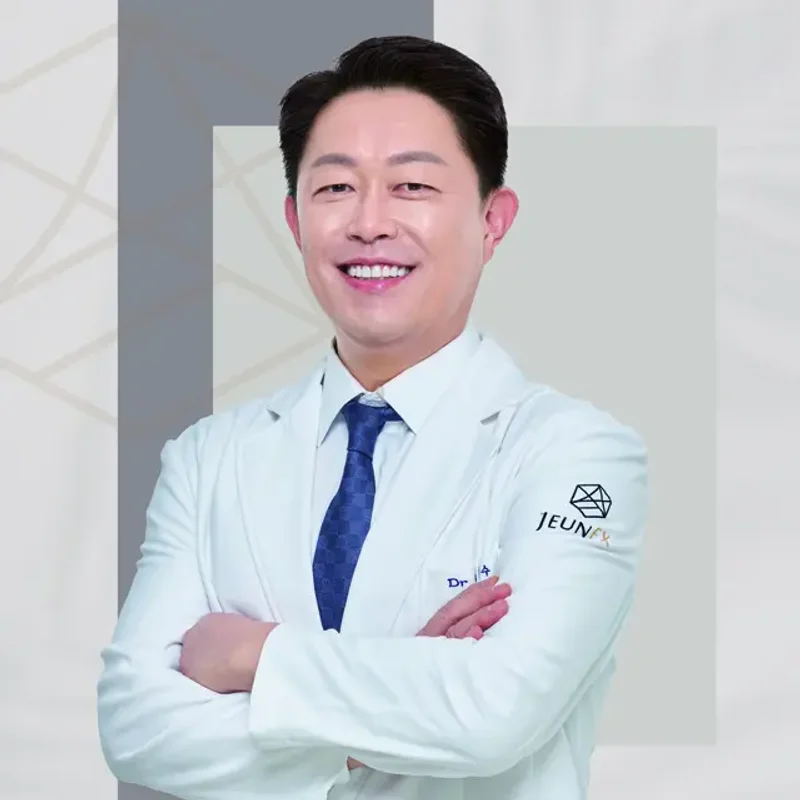
Chungdam Jeunex Clinic in Seoul lists fat grafting, adipose-derived stem cell services and SVF on its official website. It identifies Dr. Sung Ki Su as chief director. This makes it a relevant consultation option for clarifying a fat-derived proposal. Contact Jeunex to discuss your goals and the exact preparation offered.
Ask the team to distinguish volume grafting from any skin-quality component and explain the processing method in your written plan. A listed service does not establish that every technique discussed here is available or suitable. These clinics publish services relevant to this topic. Listing here is not evidence of clinical superiority. Consider the doctor's explanation and your alternatives before choosing a procedure.
Questions to resolve before deciding
Does nanofat mean purified stem cells?
No. The term does not establish a purified cell product. Ask what remains after processing and how the final material is characterized. Its proposed purpose matters as much as its name.
Is SVF always better than conventional fat grafting?
That cannot be assumed. Ask for evidence comparing the particular preparation with the relevant alternative for the same treatment area and goal. Extra processing and additional cost need an explanation of their own.
Can I compare clinics using before-and-after pictures alone?
Photographs are one part of the discussion. You also need the diagnosis, preparation, accompanying procedures, timing, risks and follow-up. Use images to clarify your expectations, then ask the surgeon how the proposed plan relates to them.
Sources and further reading
- Tonnard et al.: Nanofat grafting, basic research and clinical applications
- Yang et al.: Microfat, nanofat and ECM/SVF gel comparison
- Effects of Nanofat in Plastic and Reconstructive Surgery: systematic review
- NHS: Surgical fat transfer
- Chungdam Jeunex Clinic: published services and doctors
- ASPS: Cheek augmentation risks, including rare blindness after fat transfer
Cell Verified editorial team · AI-assisted research and writing. Editorial policy